Summary of the Challenge
Decarbonising the transport sector is a key challenge to meet net-zero targets. Carbon emissions from the transport sector represent 33% of South Yorkshire’s total emissions. Within the sector, there are some key areas where interventions to reduce emissions should be explored. For example, analysis of transport sector emissions suggest that road freight contributes to 29% of the sector’s emissions.
This project will look at the challenge of short-distance, “last mile” deliveries. These deliveries are characterised by a reliance on diesel vehicles, inefficient routing and high frequency. These deliveries contribute significantly to road freight emissions. Additionally, set within our urban areas, polluting vehicles have negative effects on air quality and congestion.
Online shopping habits have fuelled a steady increase in “last mile” deliveries. This rise in delivery traffic contributes significantly to congestion, air pollution, and carbon emissions, especially in urban areas where these deliveries are concentrated. Short-distance deliveries are also employed by some organisations that undertake a high number of internal deliveries as part of their day-to-day operations.
Our Response
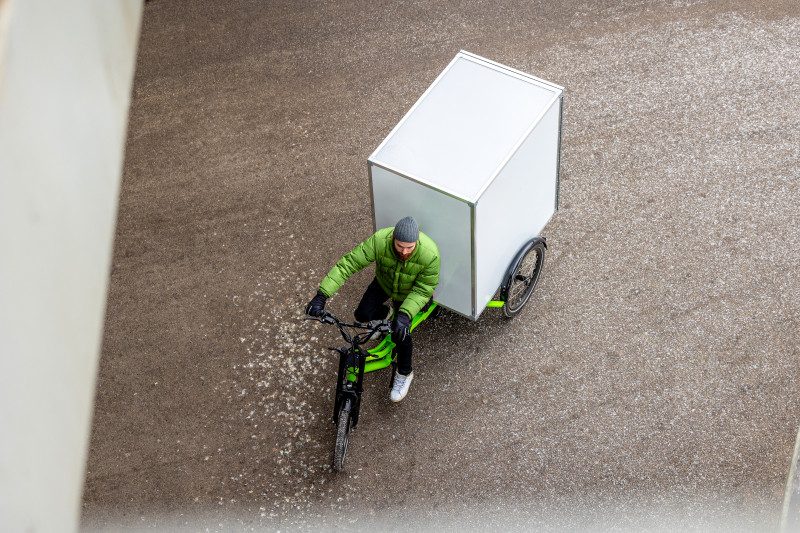
This project aims to address this challenge by evaluating the potential of eCargo bikes as a viable alternative to diesel-powered vehicles for some short-distance deliveries. By conducting a desktop feasibility study, the project will explore the environmental, economic, and social benefits of eCargo bikes, as well as the potential challenges and barriers to their implementation.
Our researchers will evaluate the potential of eCargo bikes by combining expertise from social science and engineering. A data-driven analysis, utilising modelling and simulation techniques, will assess the benefits and costs of eCargo bike adoption. The social science work package will focus on stakeholder engagement with businesses, policymakers, and other relevant parties to the experiences, lessons and outcomes of e-cargo bike schemes in other areas. This research will be combined to make recommendations for South Yorkshire’s urban areas.
The project will be organised into two work packages:
- Modelling eCargo bikes impact - Existing research suggests that eCargo bikes offer a promising solution for sustainable urban deliveries, particularly within dense urban areas where deliveries are concentrated. While studies highlight the importance of strategic depot placement and delivery point identification, few include real-world measurements.
- Policy design and business uptake - This work package will be split into two elements. Firstly it will look at policy lessons. UK eCargo bike trials, including those in Sheffield and Barnsley,voffer valuable policy lessons for future projects. A key focus will be combining existing evaluations and interviewing representatives from successful schemes (both UK and international). Secondly, we want to understand business perceptions and potential business model shifts. This will involve gathering insights from current and potential eCargo bike providers, mainstream logistics companies, and businesses that could receive deliveries via eCargo bike.
This project sits at the intersection between our Residential Energy & Transport Systems theme and Just Transition work package, demonstrating an interdisciplinary, systems-based approach to evaluating eCargo bike potential.
Co-produced with SYMCA, it will provide the evidence base needed to assess the feasibility of local eCargo bike pilots in partnership with local businesses and organisations.
Project Outputs
As part of SYSC's Consolidated Research Report we have published the following case studies: