Summary of the Challenge
An important part of our transition to net-zero is the ways in which we heat our homes. Domestic heating in the UK is highly dependent on fossil fuels. Currently, around 80% of UK households use gas central heating to heat their homes.
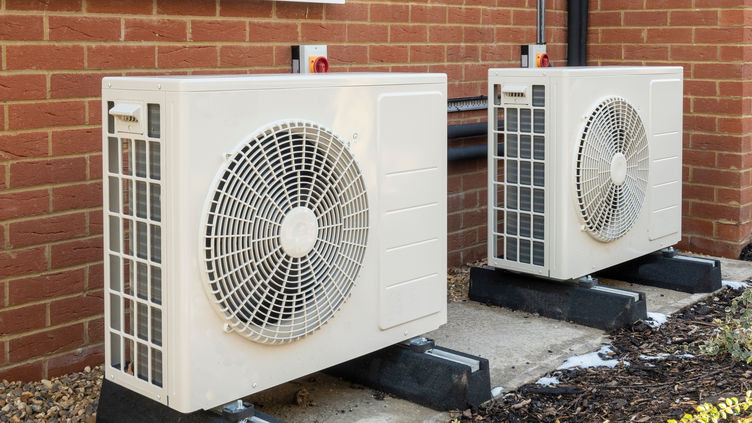
Heat pumps in their various forms offer an alternative to using natural gas boilers for heating. However, the expansion of these technologies on a large scale requires consideration from the point of view of supply chain availability, the impacts of their environmental life cycle and taking into account grid capacity.
The operational and maintenance phase stands out as a key contributor to pollution in the life cycle of heat pumps. Conducting a life cycle impact assessment is crucial to identify critical factors. Given the significant presence of fossil fuels in the UK's energy grid, it is essential to prioritise the transition to net-zero and significantly increase the proportion of renewable resources in the national grid network. Heat pumps are aligned to the UK governments net-zero goals and shift towards green energy generation.
Our Response
This project aims to explore and compare the environmental impacts of different heat pump technologies and to reduce their carbon footprints. This will include ground source, air source and water source heat pumps as well as an innovative green hydrogen-powered heat pump.
We will also examine the environmental supply chain impact assessments of heat pump products and the potential to commercialise them in the UK as well as considering how these technologies could enhance energy security within the UK.
We want to improve the sustainability of the heat pump supply chain in the UK and compare different scenarios for the heat pump industry to reach net-zero.
The research investigates various supply chain scenarios to evaluate their carbon footprint and their influence on energy in the UK. The findings will provide policymakers with a comprehensive understanding of the complete lifecycle of the heat pump supply chain and its environmental repercussions across different time periods. In all the technologies examined, it is evident that the adoption of heat pumps facilitates decarbonization in harmony with the UK's net-zero emission objective.
Our findings indicate that a significant decrease in the carbon footprints linked to the supply chain of heat pumps can be achieved by augmenting the percentage of renewable energies in the UK grid network.